From Nightlights to Neuroscience: Using CONNETIX Light Tiles for Emotional Regulation
Let’s Talk About Big Feelings for a Second
Emotional regulation. A buzzword at the moment. And honestly, it sounds like something you’d hear in a neuroscience lecture, but really, it’s just the skill of noticing your feelings, making sense of them, and finding ways to manage them that don’t involve throwing your sandwich across the room (we’ve all been there).
In children, emotional regulation is still very much under construction. Picture a busy worksite with scaffolding, noisy machinery and the occasional half-built wall; that’s your child’s nervous system in the early years. They might go from giggles to meltdowns in seconds, not because they’re being “naughty” or “dramatic,” but because their brains are still wiring up the pathways that help them calm down, problem-solve and choose flexible responses.
And here’s the kicker: kids don’t learn these skills by being told to “calm down.” They learn through experiences, routines and repeated opportunities to practise regulation with us by their side.
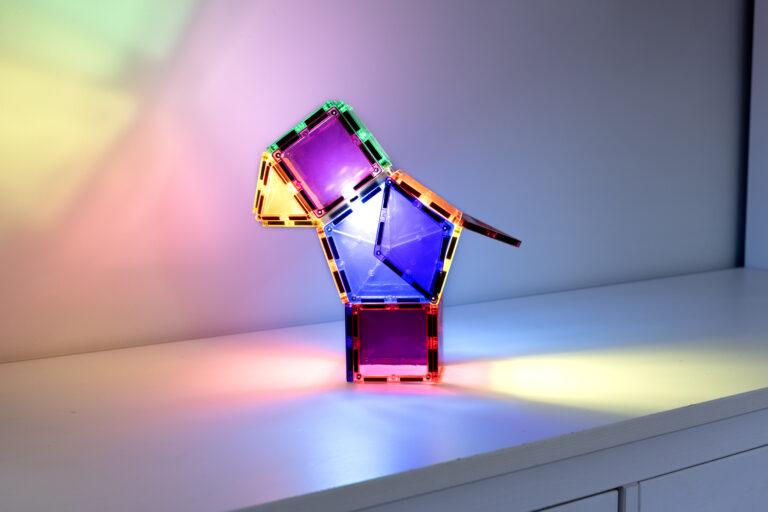
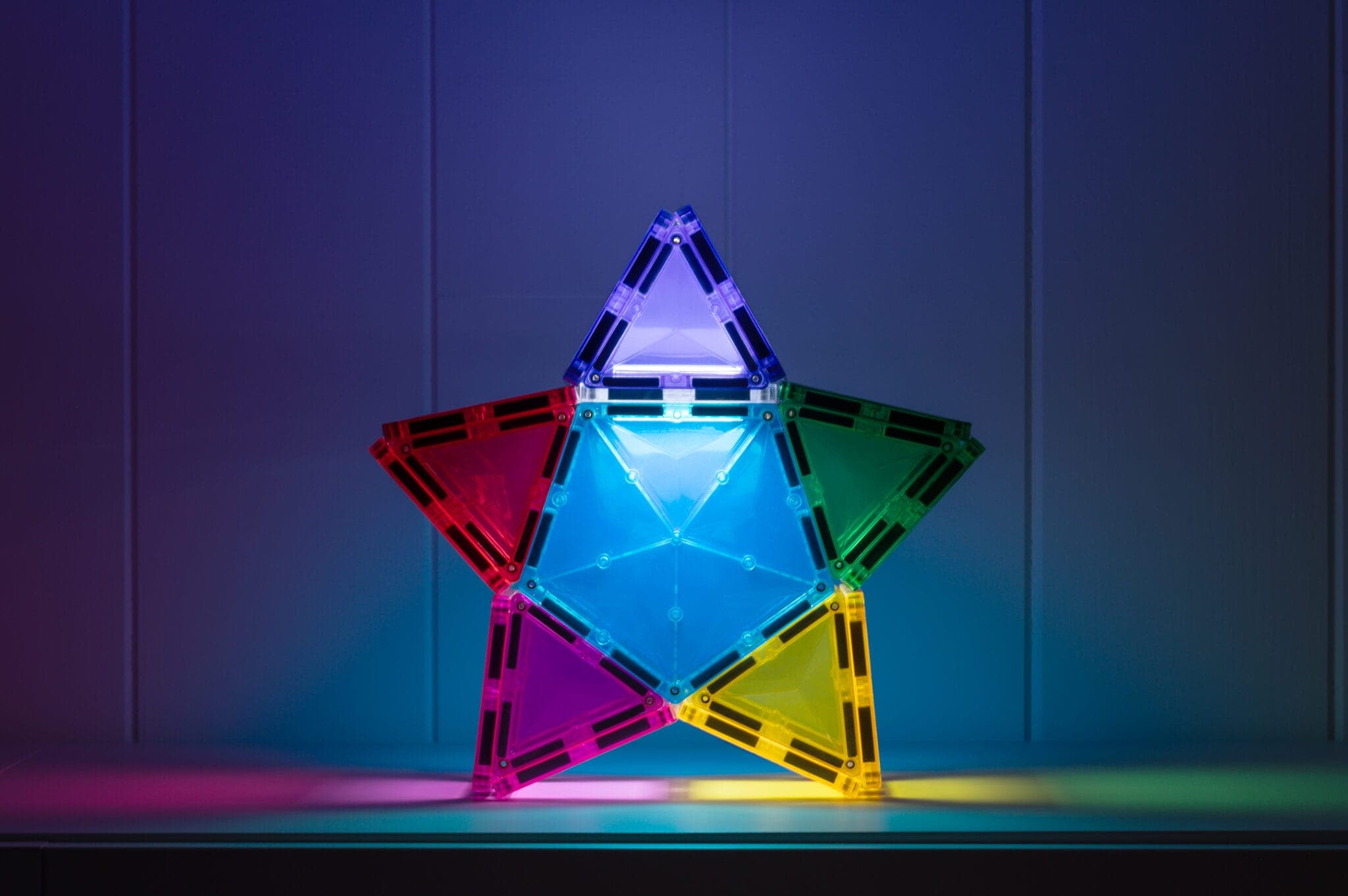
That’s where tools like the Connetix Light Star Pack come in. No, magnetic tiles won’t magically erase tantrums (if only). But they can become part of a gentle, playful toolkit that supports children’s ability to settle, transition and regulate emotions.
Why Light (and Predictability) Matter
Let’s start with light. Soft, predictable light has an almost magical effect on the human nervous system. Think of the difference between working under harsh fluorescent bulbs versus sitting in a cosy room lit by warm fairy lights. One makes you grind your teeth, the other invites a sigh of relief.
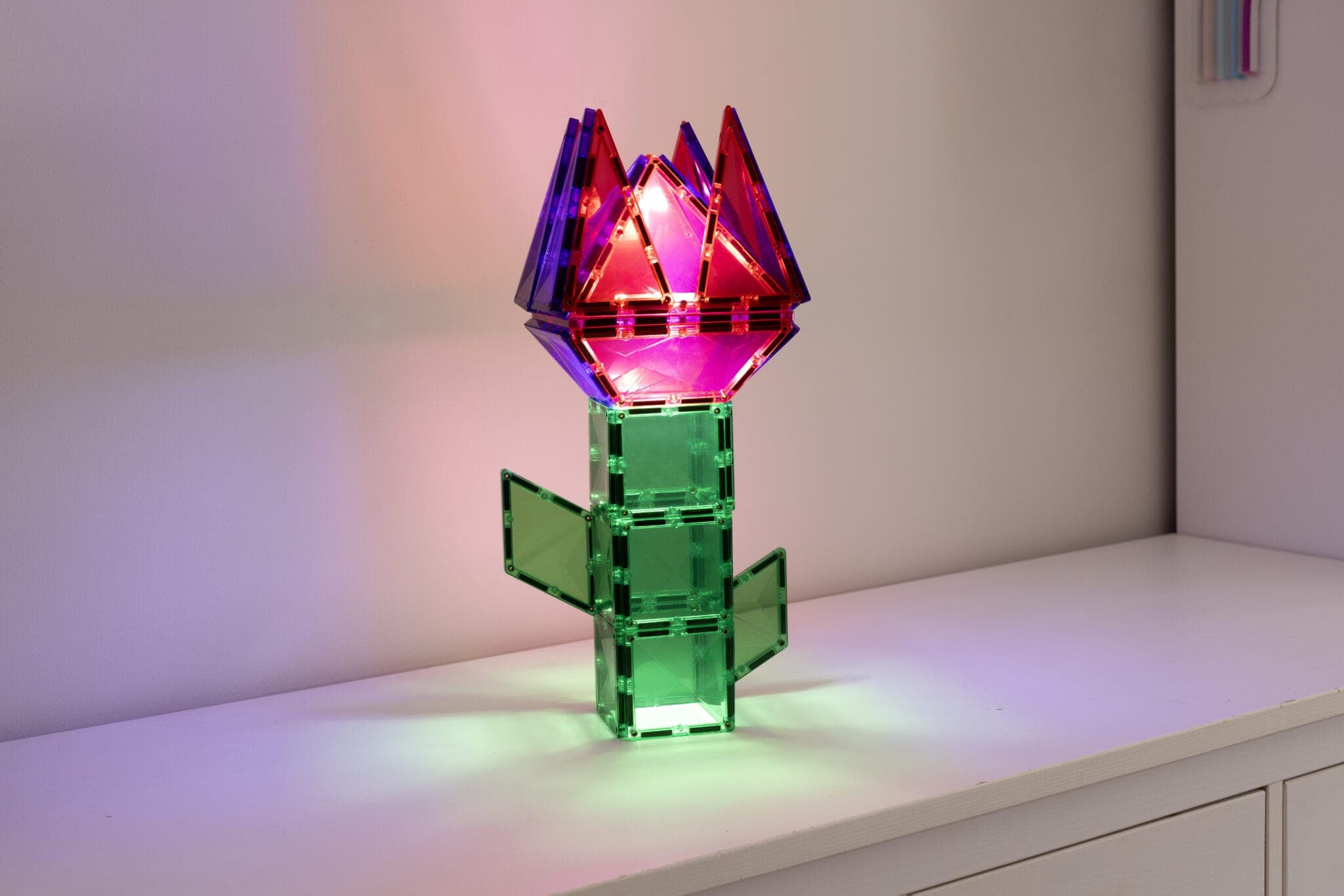
Children are even more sensitive to these cues. The glow of a light tile isn’t just pretty; it’s a sensory anchor. It provides consistency, predictability and comfort. A glowing build can become a signal: “We’re winding down now. We’re shifting gears. You’re safe.”
When paired with routine, that light becomes part of your child’s regulation toolbox. After school? Build a glowing tower before dinner. Before bed? Switch on the tile, dim the room, and create a calm-down castle together. The predictability of this ritual helps children’s nervous systems know what to expect, and their brains love predictability. (Mine does too… I’m still grumpy if someone messes with my morning coffee order.)
The Psychology Bit: Routines + Sensory Play = Regulation
Here’s the nerdy but important facts: children regulate best when three things are in place:
Magnetic tile play, especially with a glowing light piece, ticks all three.
In child psychology, we often talk about creating a “safe base”. That doesn’t have to mean a literal base (although your kids will happily build one out of tiles). It means creating predictable, soothing spaces and experiences that help children’s emotions feel manageable.
A Quick Definition (Without the Jargon Overload)
Emotional regulation skills =
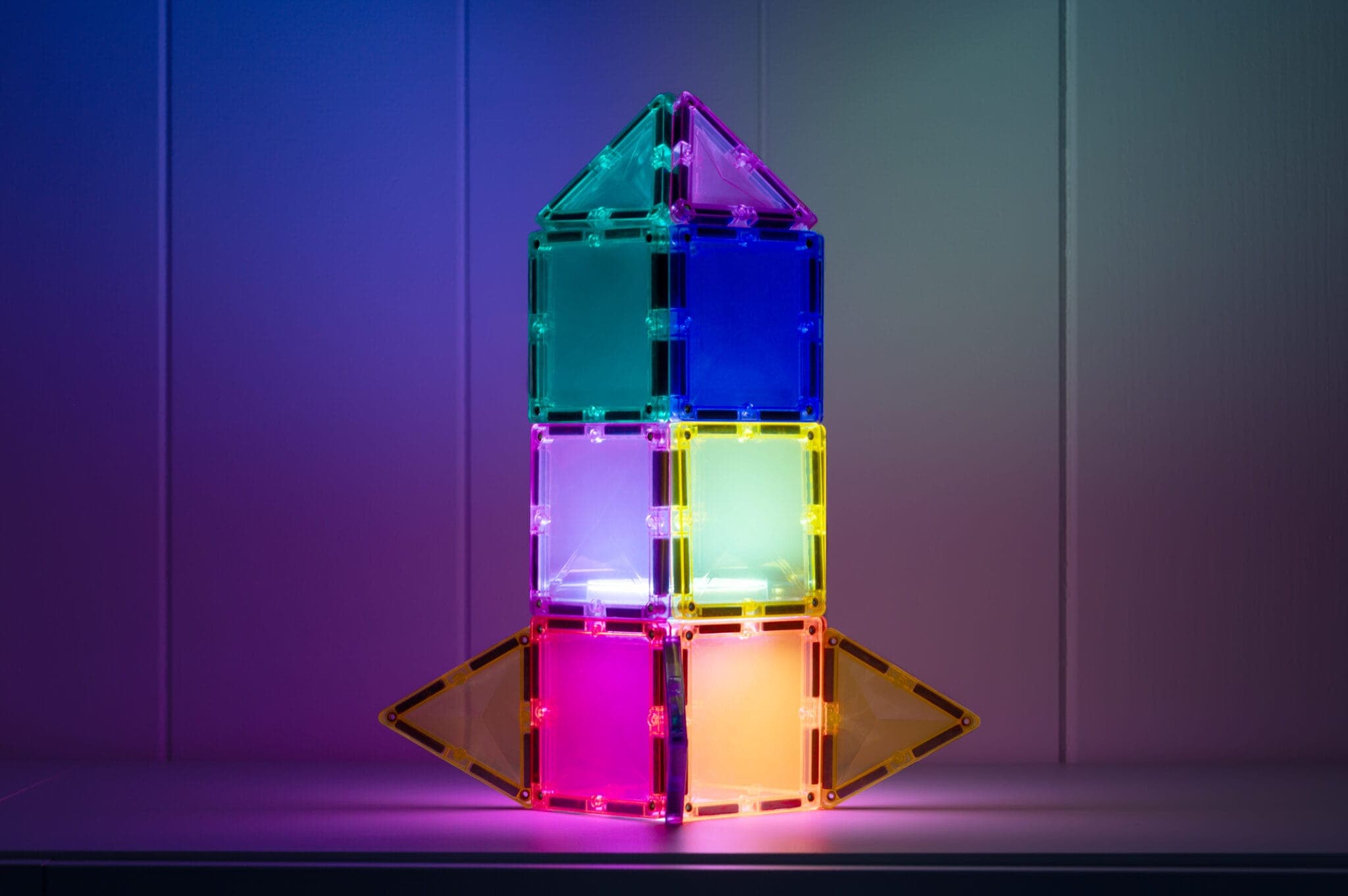
For a five-year-old, that might look like recognising “I’m tired,” having a big cry in your lap, then calming down while building a glowing rocket ship. For a seven-year-old, it might mean stomping upstairs, cooling off in their “tile cave,” and coming back when they’re ready to talk.
It’s messy, it’s imperfect, and it’s completely normal. Our role as parents isn’t to prevent dysregulation (good luck with that). It’s to offer pathways back to calm.
How Parents Can Use the CONNETIX Light Star Pack for Emotional Regulation
Here are some practical, gentle, evidence-based ways to incorporate the Light Star Pack into your child’s world:
1. The Calm-Down Castle
When your child is struggling, invite them:
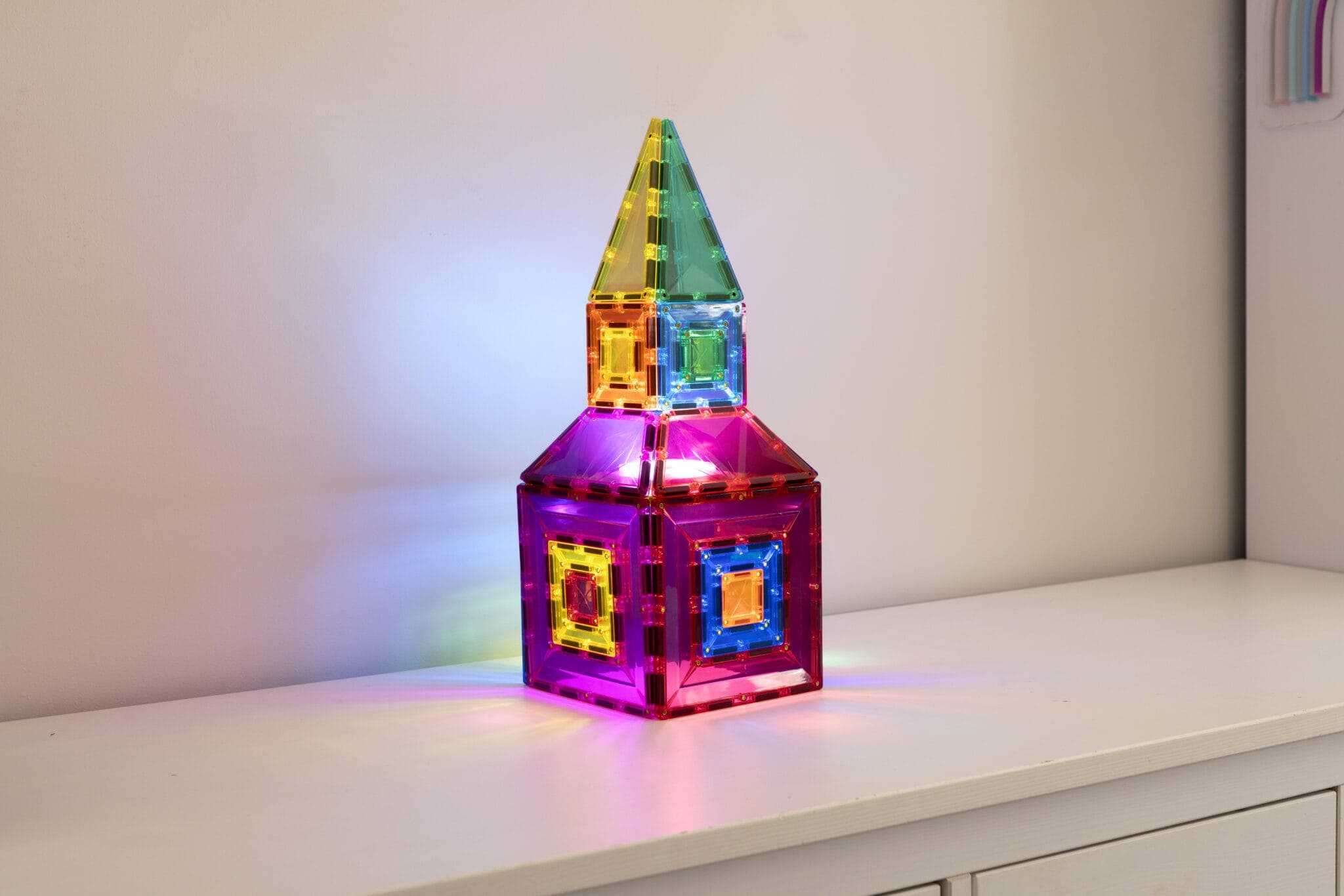
“Let’s build your calm-down castle together. Want to make a glowing tower or a star window?”
You’re not dismissing their feelings; you’re offering a sensory, co-regulated activity that helps them shift from chaos to calm.
2. Transition Rituals
Big transitions (after school, before bed, leaving for an activity) are prime meltdown moments. Use the light tile as a signal:
3. Quiet Play Zones
Create a corner with tiles and the light piece. Encourage solo play during downtime:
“This is your light lab. You can build quietly here whenever you need a break.”
For some kids, especially those who get overwhelmed socially, solo glowing builds are like meditation with magnets.
4. Naming Emotions Through Builds
Invite your child to represent feelings with colour and light:
This gives children a concrete, playful way to express feelings they might not yet have words for.
Scripts Parents Can Borrow
Sometimes, in the heat of a meltdown, our own brains go blank. Here are a few phrases you can tuck in your back pocket:
Simple, non-judgmental language paired with play is often more effective than a lecture about behaviour.
Why This Works (Neuroscience in Plain English)
When children are upset, their “thinking brain” (prefrontal cortex) often goes offline. That’s why logic (“You need to calm down because we’re late”) rarely works in the moment.
Play, touch and sensory experiences bypass that shutdown. The light tile, with its glow and predictability, activates soothing pathways in the nervous system. It’s like giving the brain a gentle nudge: “Hey, you’re safe. You can come back online now.”
Over time, these repeated experiences strengthen your child’s ability to regulate without as much adult scaffolding. In other words: today’s glowing castle is tomorrow’s independent coping strategy.
Gentle Reminders for Parents
Bringing It All Together
The CONNETIX Light Star Pack is not a cure-all. But in the hands of a parent who understands that play is the language of children, it becomes a bridge: from chaos to calm, from “too much” to “just enough.”
When we build glowing castles together, we’re not just stacking tiles. We’re stacking skills: self-awareness, problem-solving, flexibility and resilience.
And maybe, just maybe, we’re also stacking memories… of safe laps, glowing lights and the quiet joy of building something together.
Parenting in the early years is a constant dance between chaos and connection. Emotional regulation isn’t about silencing that chaos; it’s about giving our children tools to navigate it.
So next time your child is spiralling, grab the light tile, dim the lights, and say:
“Come on, let’s build your calm-down castle.”
It won’t erase every big feeling. But it will remind your child that emotions can be held, soothed and transformed, and that they never have to do it alone.
Tags

Emily Hanlon, otherwise known as The Playful Psychologist, is a Clinical Psychologist from Sydney. She is also the proud mum of 4- and 1-year old boys, and is expecting her third baby this year. Emily has a specific interest in autism spectrum disorder and developmental delay. She has experience providing individual and group therapy for children, adolescents, and adults with a variety of presentations including ASD, Attention Deficit Hyperactivity Disorder (ADHD), mood-related disorders, anxiety, poor social skills, and other behavioural concerns. Emily draws on her own personal experiences of having a brother on the Autism Spectrum, and uses her unique first-hand experience, to facilitate her own therapeutic practice. Emily started The Playful Psychologist to share her love of creativity within her work. She enjoys sharing her ideas, and also loves learning from others! As a psychology student, and a young psychologist, she always wished she had somewhere to turn for inspiration - and that is what she hopes to do for educators, parents, and psychologists alike! Emily is extremely proud of the online community she has created to support the social and emotional development of children by upskilling the adults who support them.
Menu
 Australia